
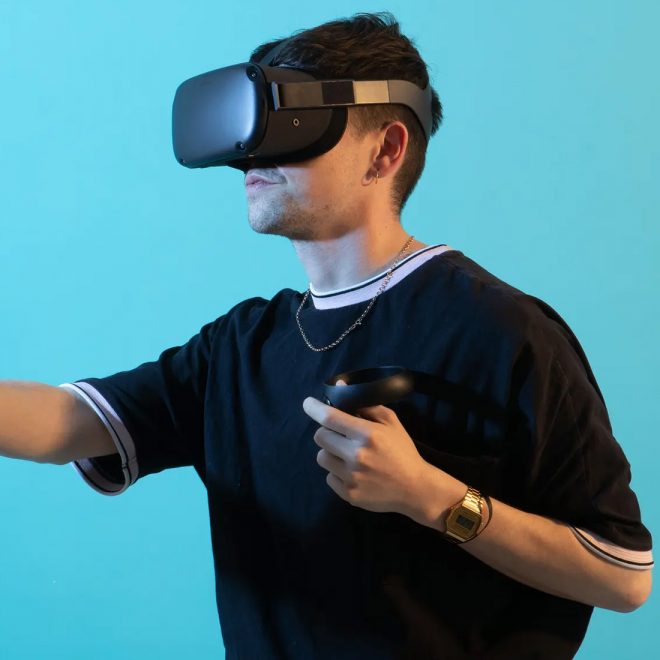
While the pharmaceutical space is steeped in innovation we were challenged with creating a virtual reality application that covered a lot of material in a little time. We developed a highly immersive interactive cinematic scene that showed the mechanism of disease for Lupus Nephritis and a proposed therapy. This programed provided beautifully rendered 3D animated views of the camera swimming past the blood barrier into the body deep into the patient’s kidney to learn about the cascade of events for this autoimmune diseases which cause your immune system to attack your healthy cells.
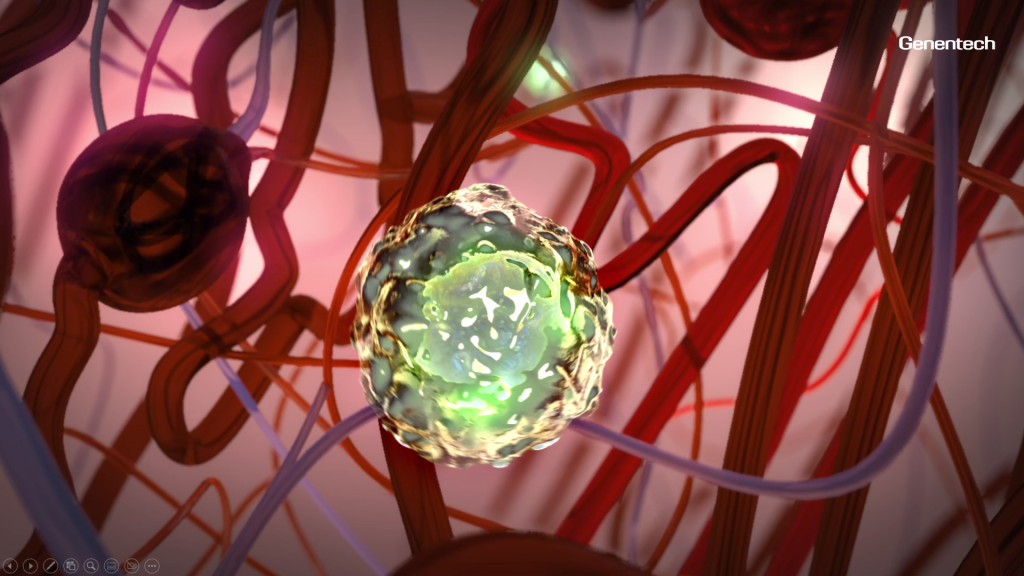
Knowing that this program will be used to start or aid conversations in a number of settings (ex. congress event, business meeting, etc.) we gave it a few key chapter breaks. Act one locates and focuses on the pathway of the disease, act two takes us to a theretical space to assemble the components of the investigational therapy (*at the time of this post) Obinutuzumab, and act three resolves the scene with the humanized anti-CD20 monoclonal antibody in the mix.
Most importantly, this program uses leading edge VR to get the target audience/user to complete the story. From and learning and engagement POV this is the most effective tactic. As most of us know, when well designed and executed gamified learning has the most ‘sticking’ power when it comes to learning and retention.
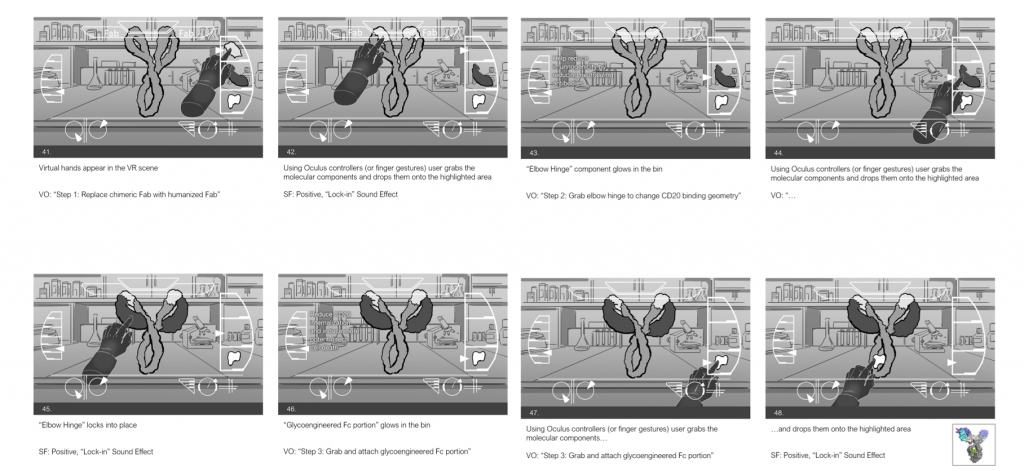
Through discovery and development we worked very close with leading medical researchers, executive stakeholders and subject matter experts (SMEs) to be clear on the cascade events and the overall technical accuracy of the interactive story. Once the scripts and storyboards were approved we worked with experienced technical artists and animators to develop and bring the scenes to life. This effort paired with traditional post production (color, compositing, edit, sound engineering) paired with programming and Q&A brought all the pieces together to create a 3-5 minute technically accurate custom VR program for Oculus Rift.